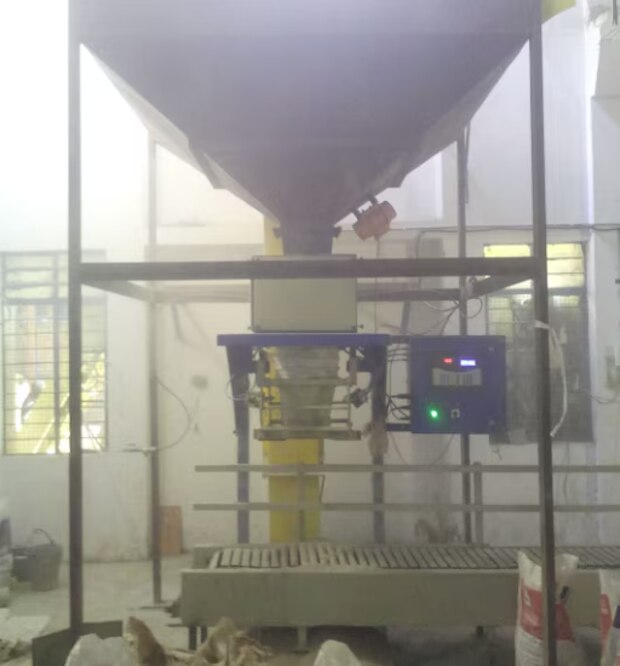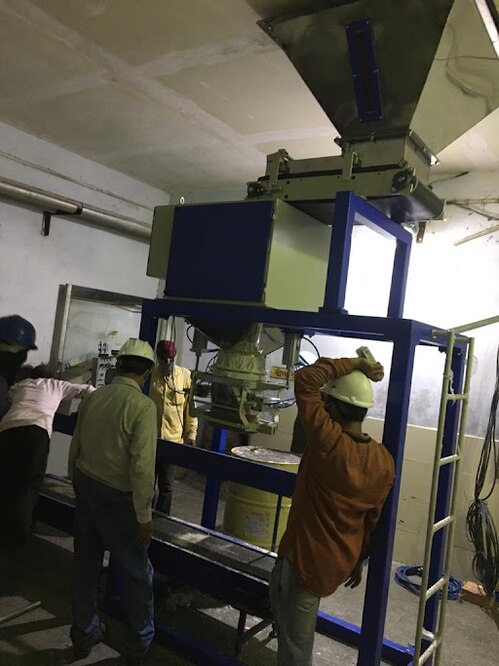
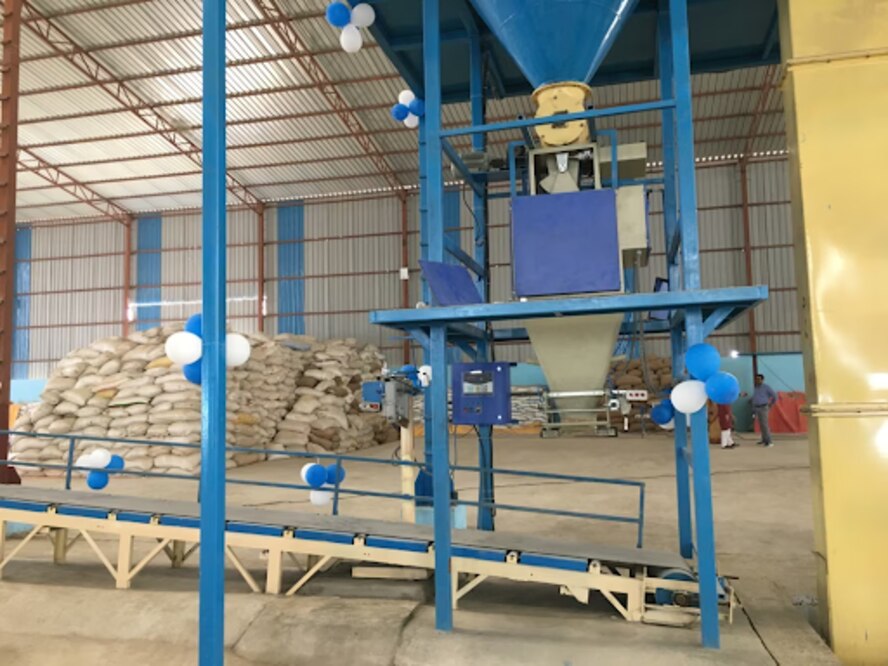
A poultry-feed filler must match the product’s flow behaviour, target bag weights and bag-closing method—not just the words “gravity” or “poultry feed” on a specification sheet. By checking the feed form, weighing arrangement, hopper capacity, filling controls and witnessed test results, you can identify whether a net gravity machine fits your line or whether a belt or gross system is safer.
Key takeaways
- Use gravity filling for free-flowing pellets and stable crumbles.
- Reject gravity-only designs for dusty mash that bridges or becomes cohesive.
- Specify target weight, hopper capacity, gate stages and weighing accuracy.
- Test your actual feed, bag and target weight before ordering the machine.
Does your poultry feed flow well enough for gravity filling?
Free-flowing pellets and many crumbles suit a net gravity feeder bag filling machine for poultry feed. Mash is a poor match when it is dusty, cohesive or prone to bridging; it may need agitation, vibration, fluidization or auger assistance instead of a larger gravity gate.
Check the actual product, not only the label “poultry feed”:
- Pellet or crumble size: large, uniform particles discharge more predictably than a mixed size distribution.
- Fines: excess fines fill voids, increase dust and slow the hopper outlet.
- Moisture: damp feed can cake on walls and stop the flow.
- Oil or fat coating: a heavy coating can make particles sticky and disrupt clean discharge.
- Bulk density: weigh and measure the delivered product; lower density reduces the kilograms held by a given hopper volume and can reduce bagging rate.
- Bridging: watch whether feed forms an arch above the outlet instead of collapsing into it.
- Flow consistency: test the beginning, middle and end of a run, including after hopper refill.
A gravity machine works when the product starts and stops cleanly, reaches the outlet without manual intervention and repeats the same mass at each cycle. If flow changes as fines accumulate, moisture varies or coating builds up, the scale may remain calibrated while bag weights drift.
Run the actual pellet, crumble or mash at the intended target weight before approving the machine.
When is net weighing better than belt or gross weighing?
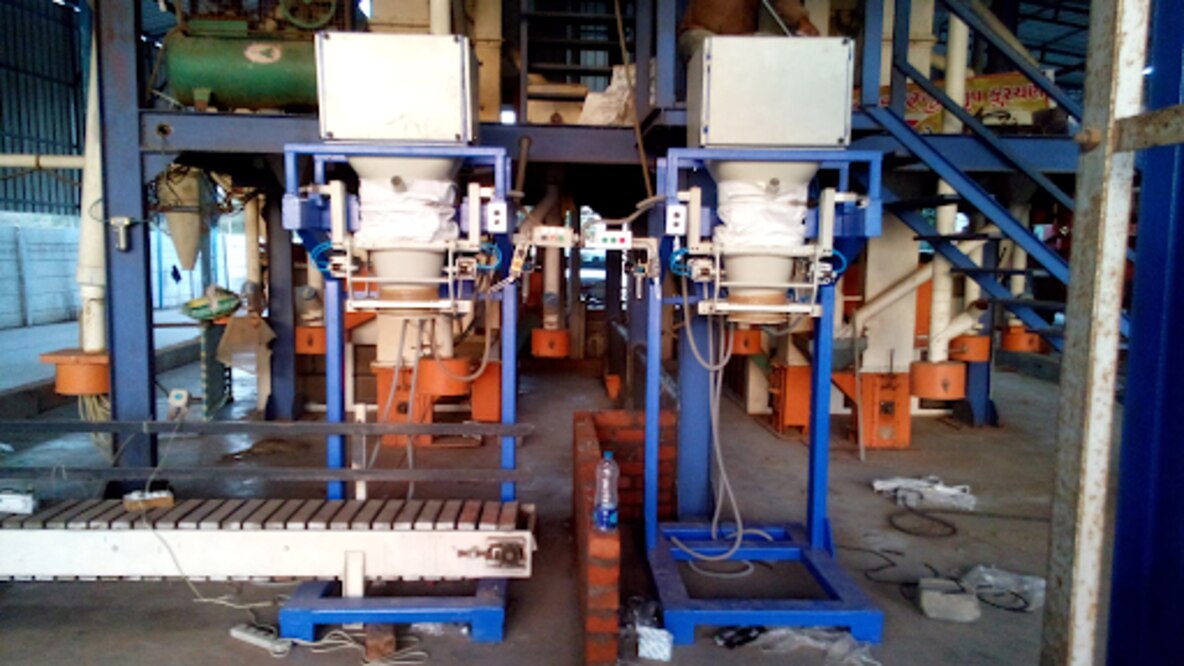
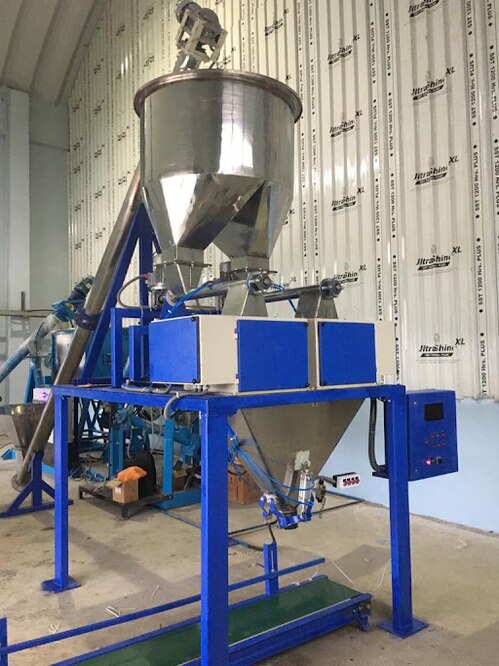
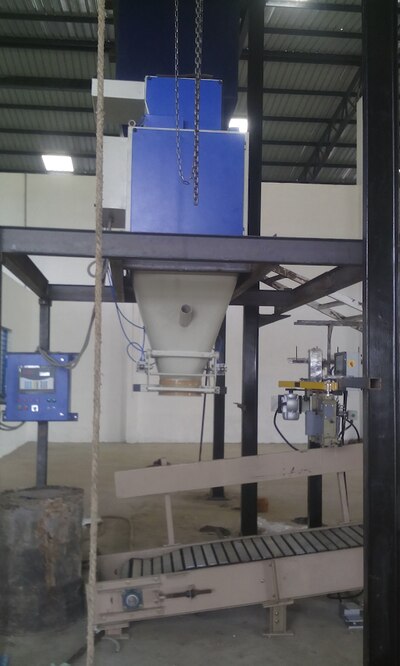
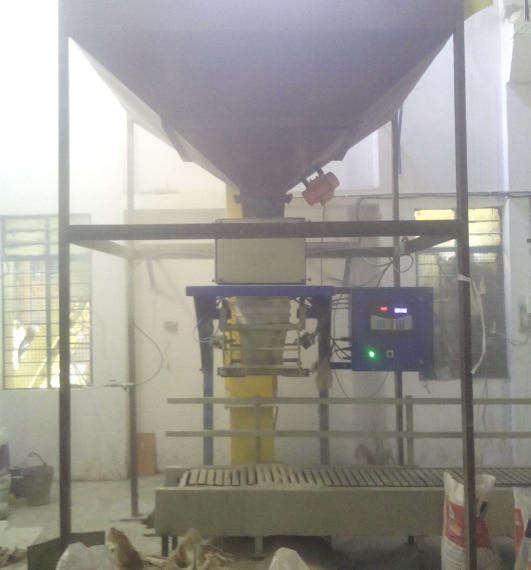
A net gravity feeder bagging machine weighs each batch in a separate hopper, then releases the weighed feed into a clamped bag. Because the scale measures product before discharge, different empty-bag weights do not distort the target mass.
1. Confirm that “net” means a true pre-weigh hopper. Ask whether accuracy covers the complete weighing, discharge and bag-release cycle, not only the load cell. A poultry feed bag filler described as “net” may otherwise be a gross, volumetric or auger machine.
2. Check the product against the feeding method. Free-flowing pellets and consistent crumbles suit gravity gates. Oily, damp or sticky feed can cling to hopper walls; dusty mash and feed with many fines can bridge, compact or discharge slowly. Agitation, vibration, fluidization or an auger may be needed.
3. Compare the machine with the bag, not just the material. Confirm how the system handles tare changes, dust extraction, bag-mouth opening and the intended woven polypropylene, paper or laminated bag before choosing sewing or heat sealing.
| Option | How it weighs or feeds | Best fit | Main limitation |
|---|---|---|---|
| Net gravity | Weighs product in a hopper, then discharges into the clamped bag | Free-flowing pellets or stable crumbles requiring tight mass control | Bridging, dust and inconsistent flow can slow discharge |
| Gross weighing | Weighs the bag and its contents together during filling | Operations accepting bag-by-bag tare management | Empty-bag variation affects the measured gross mass |
| Belt feeding | Moves product continuously into the bag or weigh system | Oily, damp, sticky or poorly flowing feed | Needs belt control and cleaning; it is not automatically more accurate |
The net arrangement is the stronger choice when feed flows freely and filled-bag weight matters more than maximum feed continuity.
Which target weight, hopper and feed controls should you specify?
Match each bag size to a stated target-weight range, not to the name of an unnamed machine variant. A 10 kg bag needs a different usable weighing range and cutoff adjustment from a 50 kg bag, even when both use the same gravity principle.
| Target bag | Specify before ordering | Main check |
|---|---|---|
| 10 kg | 10 kg target, declared tolerance, short fine-fill cutoff | Confirm the scale remains stable at the lower load |
| 25 kg | 25 kg target and bags per minute | Check discharge time at the feed’s actual bulk density |
| 40 kg | 40 kg target and compatible bag dimensions | Confirm the hopper does not bridge between batches |
| 50 kg | 50 kg target and full-load weighing capacity | Verify load-cell capacity, frame strength and clearance |
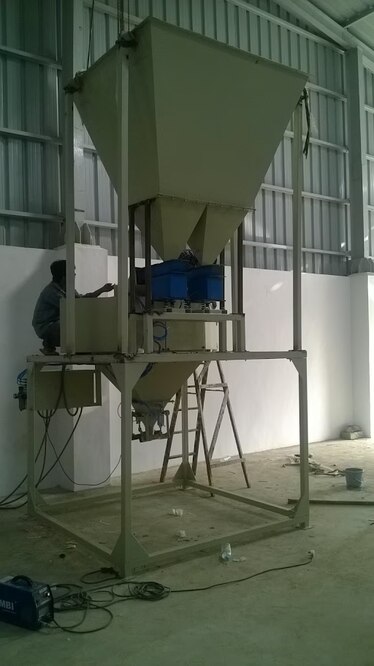
Measure bulk density for the actual pellet, crumble or mash, then calculate product volume as target mass divided by bulk density. Add usable headspace without allowing the hopper to become so deep that fines compact and stop flowing. A low-density feed needs more volume than its kilogram target suggests.
Specify separate coarse and fine gates, with dual-speed filling: fast flow loads most of the batch, then a slow dribble reaches target without overshoot. Ask whether the GFTNT bag filling machine designation identifies a supplier-specific model; request its weighing range, accuracy, product-contact materials and bag-closing arrangement in writing.
Confirm the clamp and closure suit woven polypropylene, paper or PE-lined bags. The bag opening, sewing or heat-sealing method, and dust control must match the selected material. A nominal 10–50 kg claim is not evidence that every size is supported.
What happens during a complete filling cycle?
A complete cycle starts with an operator placing an empty poultry-feed bag on the filling spout. The machine must confirm bag-present detection before clamping; without that interlock, feed can spill onto the floor.
1. Product loads from the supply hopper into the separate weigh hopper. The coarse gate opens for rapid filling, then closes to a narrow opening for fine dribble as the target weight approaches.
2. The controller pauses for scale stabilization. It checks that vibration and falling feed have stopped before recording the batch weight; pellets with fines can continue settling after the gate closes.
3. The clamps hold the bag while the weighed batch discharges into it. The machine then releases the bag, allowing the operator or conveyor to transfer it to closing.
4. The open mouth is sewn, heat-sealed, or sewn and taped, depending on the woven polypropylene, paper, or laminated bag. A stiff or dusty mouth can cause more stoppages here than at the filling head.
One operator can usually load bags, remove filled bags, and feed them to the sewing or sealing station on a single-head net gravity feeder bagging machine. That staffing pattern limits actual line output. The advertised filling-head rate excludes bag placement, detection, clamping, discharge, release, closing, and handling time.
High output may require automatic bag placement, a surge hopper, or a second head.
How do you prove the machine fits before purchase?
Prove fit with your own feed, bags and targets before signing: a catalog range cannot reveal how fines, moisture or low bulk density will affect weighing.
1. Ask for a witnessed trial using the actual pellet, crumble or mash. Run the minimum, nominal and maximum target weights, record every bag’s weight, and request a weight-distribution report showing mean, minimum, maximum and spread. Repeat the runs after hopper refill and product changeover; flow can shift even when zero calibration remains correct.
2. Inspect the machine under operating conditions. Confirm the dust-extraction connection, enclosure, grounding and site hazardous-area provisions, then check that operators can reach the hopper, gates, load cells and product-contact surfaces for cleaning. Reject inaccessible ledges or materials that cannot withstand your feed-hygiene procedure.
3. Put compliance in the purchase specification. Ask which clauses of OIML R 61 apply to the weighing instrument, what local legal-metrology verification is required, and which feed-hygiene controls cover contact materials, cleaning and contamination prevention. Require calibration and test records, not a zero reading alone.
4. Treat GFTNT bag filling machine as a model designation, not a performance standard. Require its target-weight range, weighing principle, contact materials, achieved accuracy, cycle-time basis, bag-closing integration and PLC interface in writing.
A bag filling machine manufacturer in Vadodara should demonstrate conveyor, bag placer and sewing or sealing operation during the trial and state response times, spare load cells and gate components, commissioning scope and service support. Shivam Control Systems should be assessed on those deliverables rather than location alone.
Related products
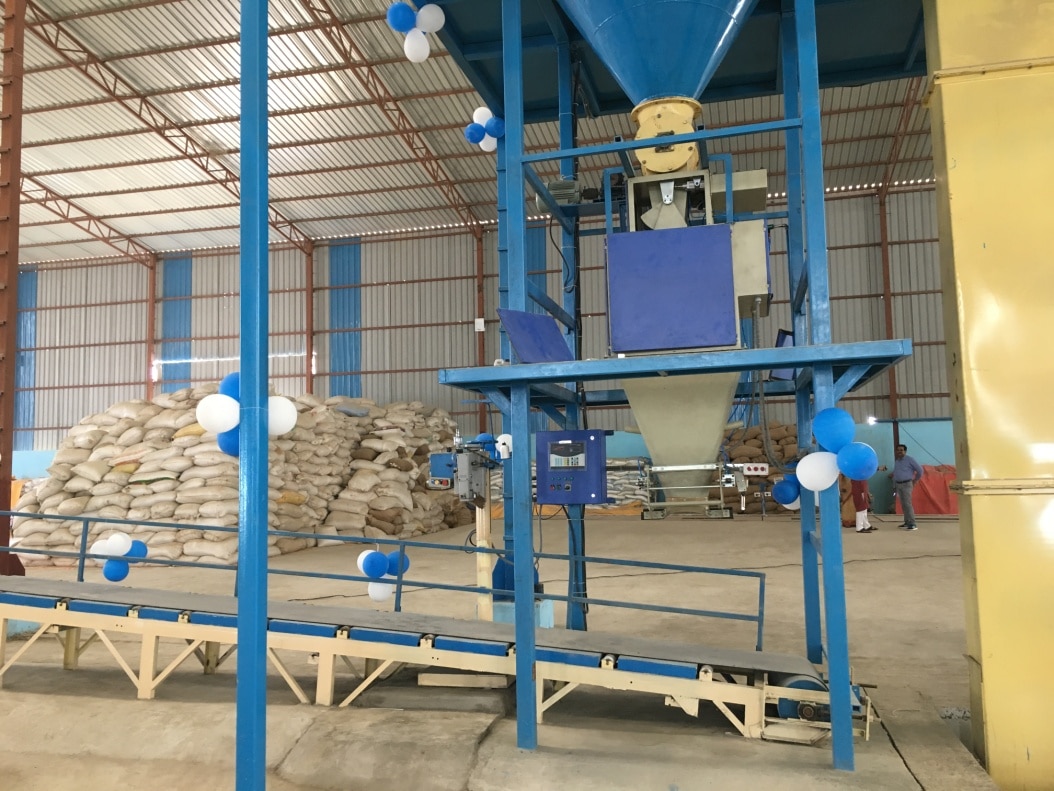 | Bag Filling Machines Gravity Feeder Type Bag Filling Machine ( Net Type ) • Ideal for Whole Grains, Pulses, Sugar, Cattle & Poultry feed, Dry Sand, Fertilizers, etc. • Accuracy: +/- 0.2 % in weight. View product → |
 | Bag Filling Machines Gravity Feeder Type Bag Filling Machine ( Gross Type ) • Ideal for Whole grains, granules, Ready-mix, Sand, etc. • Accuracy: +/- 0.2 % in weight • Speed: 3-4 bags per minute • Capacity: 20-50 kg • Gate... View product → |
Frequently asked questions
Does poultry feed flow well enough for gravity filling?
Pellets and many crumbles suit gravity filling when they discharge consistently. Dusty, cohesive mash that bridges or segregates needs agitation, vibration, fluidization or auger assistance.
When is net weighing better than belt or gross weighing?
Net weighing measures product in a weigh hopper before discharge, so the bag is not part of the measurement. It suits repeatable poultry feed dosing and avoids weighing errors caused by bag variation.
Which target weight, hopper and feed controls should you specify?
Specify the target bag weight, product bulk density, hopper working volume, bag dimensions, coarse and fine feed gates, load-cell capacity, cutoff control and allowable weight error.
What happens during a complete filling cycle?
The machine clamps or supports an empty bag, fills a separate weigh hopper, stops feed at the target weight, discharges the weighed batch into the bag, releases it and prepares for the next cycle.
How do you prove the machine fits before purchase?
Run your actual poultry feed through a witnessed test using the intended bag and target weight. Check flow, bridging, dust, cycle time, repeatability, residual product and final bag handling.
Keywords